
THE EXPEDITION REPORT / PLAY REALM GUIDE
Balatro
A compact strategic machine whose best runs come from understanding why modest effects become powerful together.
Game facts
- Developer
- LocalThunk
- Publisher
- Playstack
- Released
- 20 February 2024
- Platforms
- Windows · macOS (Steam edition)
- Model
- Paid game
- PEGI
- 12 — Nintendo Switch download edition edition; not a separate PC classification
- Players
- Single-player
- Length
- Medium
- Difficulty
- 3 / 5 · Challenging
- Steam Deck
- Verified
PEGI source ↗ · Steam Deck status source ↗
Edition: Base game
The score, explained
The interest and responsiveness of the core decisions and actions.
How progression, exploration and goals fit together.
The coherence of the visual, musical and narrative presentation.
How clearly the game explains its rules and offers useful ways to engage.
The depth of optional goals, alternative approaches and reasons to return.
Start with a hand, build an exception
Balatro begins with familiar poker hands, then quickly makes the value of those hands unfamiliar. Chips and multiplier combine to determine your score, and the target rises as the run progresses through blinds. That arithmetic gives every discarded card a purpose. You are deciding whether to accept a dependable result or spend another opportunity pursuing something stronger. The absence of an opponent at the table is important: the contest is against a scoring requirement and the limitations of your own deck. For Play Realm Guide, this is an excellent example of a small rule set supporting substantial decisions. A good run develops when you stop asking which hand is normally strongest and start asking which hand your current machinery rewards.
The shop is where the argument develops
Jokers change the incentives around every hand you play. Some reward particular ranks or suits, while others encourage habits that would be unhelpful in a different run. Planet cards improve hand types, and other consumables alter individual cards or the shape of the deck. The shop therefore creates a continuing negotiation between immediate survival and future strength. Spending money now can solve the next blind, but keeping money can support the economy that funds later improvements. Positioning effects in a useful order adds another consideration once bonuses interact. These systems work because their consequences return to the same clear question: can this collection of decisions produce enough points from the cards that are actually available to you?
A promising plan can still run out of room
The most frustrating losses arrive when a build has a persuasive idea but lacks the flexibility to meet a particular boss blind. A restriction on a hand type or scoring condition can expose a weakness that ordinary rounds allowed you to ignore. Random shop offers also mean that recognising a desirable combination does not guarantee access to it. Players who want complete control over their strategic direction should understand that improvisation is part of the appeal. The visual rush of large numbers can make a mediocre decision feel exciting, so it helps to inspect what is contributing to the total. Balatro is at its best when you can separate the pleasure of a spectacular score from the strength of the system producing it.
Choose it for decisions that stay legible
Balatro earns its place here by making a complicated outcome traceable to a handful of understandable choices. You can often identify the Joker, card modification or purchase that changed a run's direction, which makes another attempt feel purposeful. Different decks and stakes alter the constraints without requiring a new vocabulary for every challenge. It is a strong choice for players who enjoy probability, adaptation and finding an efficient interaction among modest effects. Someone seeking a story-led campaign should look elsewhere. The enduring attraction is the compact strategic conversation between what the deck contains, what the shop offers and what the next blind demands. Each new run asks you to construct an answer from a different collection of opportunities.
The verdict
A compact strategic machine whose best runs come from understanding why modest effects become powerful together.
Reasons to play
- Scoring exposes the effect of each choice
- Shops connect economy to deck development
- Different decks change the starting problem
Reasons to think twice
- Boss restrictions can expose narrow builds
- Random offers limit control over a plan
See the game
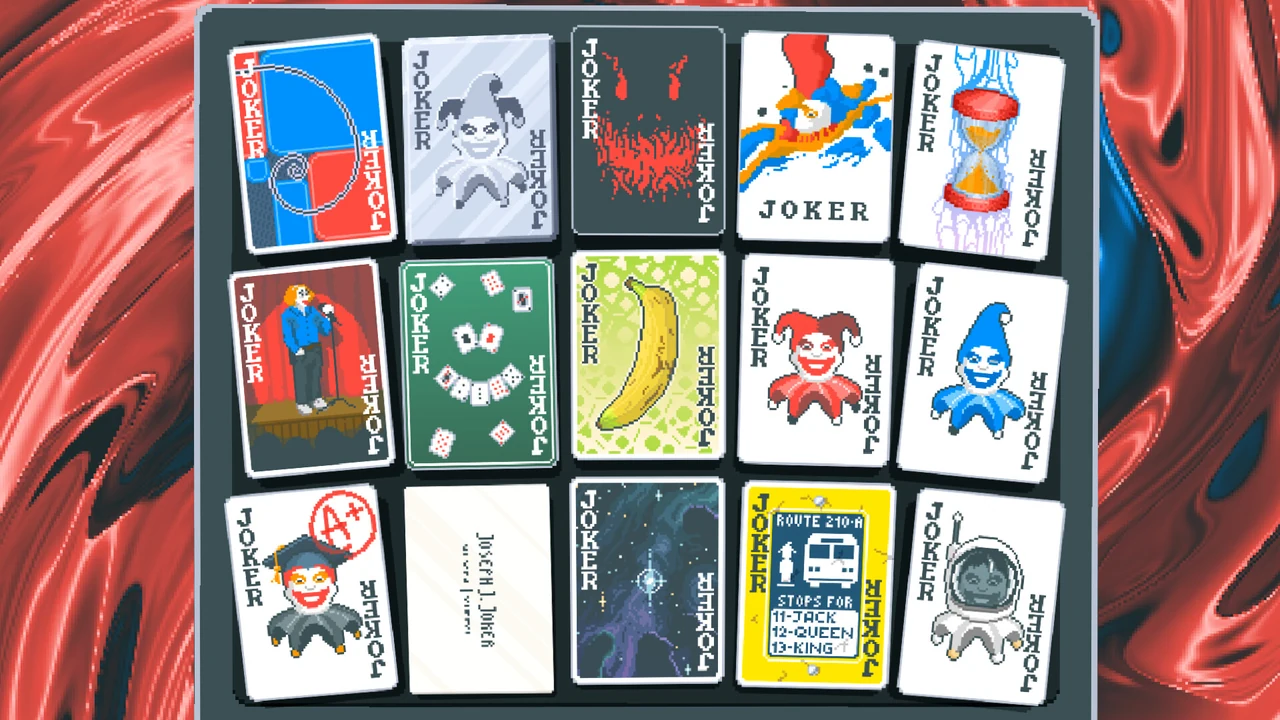
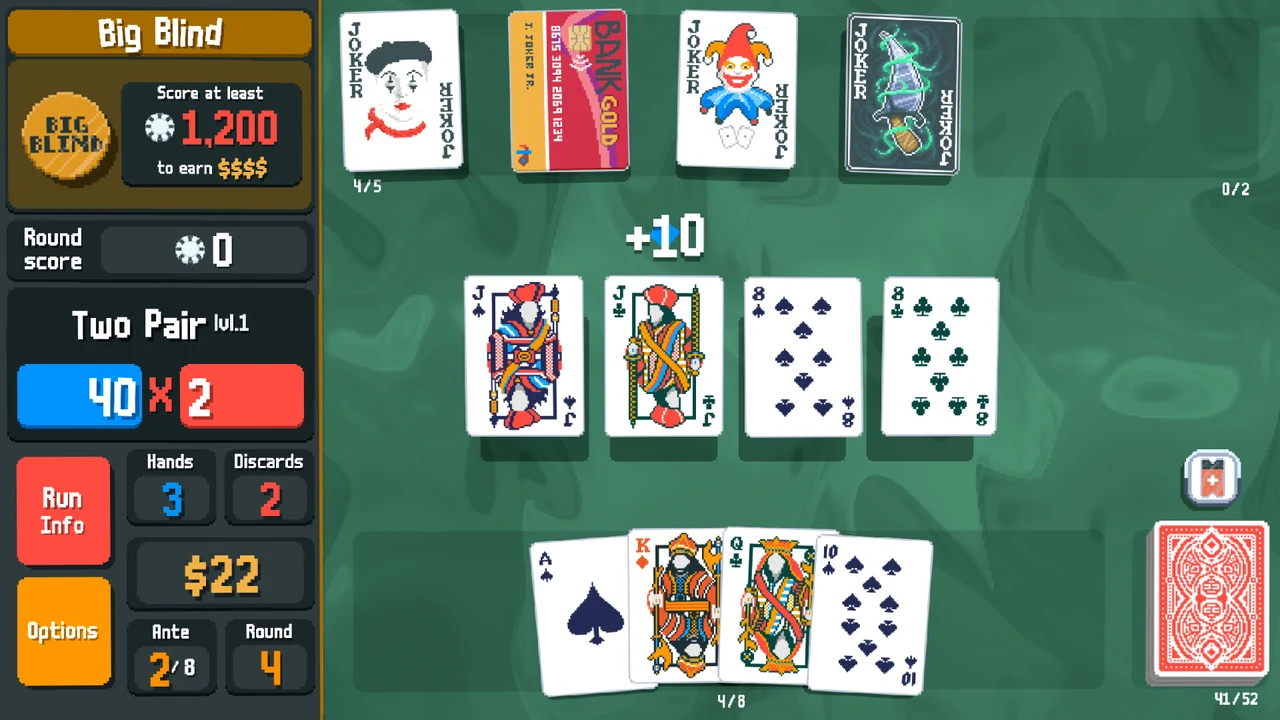
Assist & accessibility
Parents’ guide
Players: Single-player. No in-game purchase marker in the checked Steam listing. Separate downloadable content may be sold.
Age classification: 12. Nintendo Switch download edition edition; not a separate PC classification
A useful starting tip
Choose Jokers that support the hands your deck can actually produce, then reconsider card additions that make those hands less reliable.
A different direction
Compare this with Slay the Spire: A remarkably coherent deckbuilder in which route, reward and removal decisions all contribute to the same evolving plan.
Official sources
Reviewed: November 2026
You might also like
 Into the BreachRead review →
 Slay the SpireRead review →
 FrostpunkRead review →