THE EXPEDITION REPORT / PLAY REALM GUIDE
Slay the Spire
A remarkably coherent deckbuilder in which route, reward and removal decisions all contribute to the same evolving plan.
Game facts
- Developer
- Mega Crit
- Publisher
- Mega Crit
- Released
- 23 January 2019
- Platforms
- Windows · macOS · Linux (Steam edition)
- Model
- Paid game
- PEGI
- 7 — Nintendo Switch edition; not a separate PC classification
- Players
- Single-player
- Length
- Medium
- Difficulty
- 4 / 5 · Challenging
- Steam Deck
- Verified
PEGI source ↗ · Steam Deck status source ↗
Edition: Base game
The score, explained
The interest and responsiveness of the core decisions and actions.
How progression, exploration and goals fit together.
The coherence of the visual, musical and narrative presentation.
How clearly the game explains its rules and offers useful ways to engage.
The depth of optional goals, alternative approaches and reasons to return.
The route is part of the deck
Slay the Spire makes planning begin before a card is played. The map offers different paths through fights, events, shops and rest sites, and choosing one is a judgement about the condition of your current deck. A demanding elite encounter promises a useful reward, but a damaged character may need a safer route to remain viable. Combat then supplies immediate evidence about that decision. Enemy intentions show the pressure coming next, while energy limits how much of your hand can answer it. The opening act is therefore less about finding a favourite card than establishing a workable relationship between damage, defence and the challenges on the route. That relationship gives the game's strategic choices a strong sense of continuity.
Fewer cards can mean more reliable answers
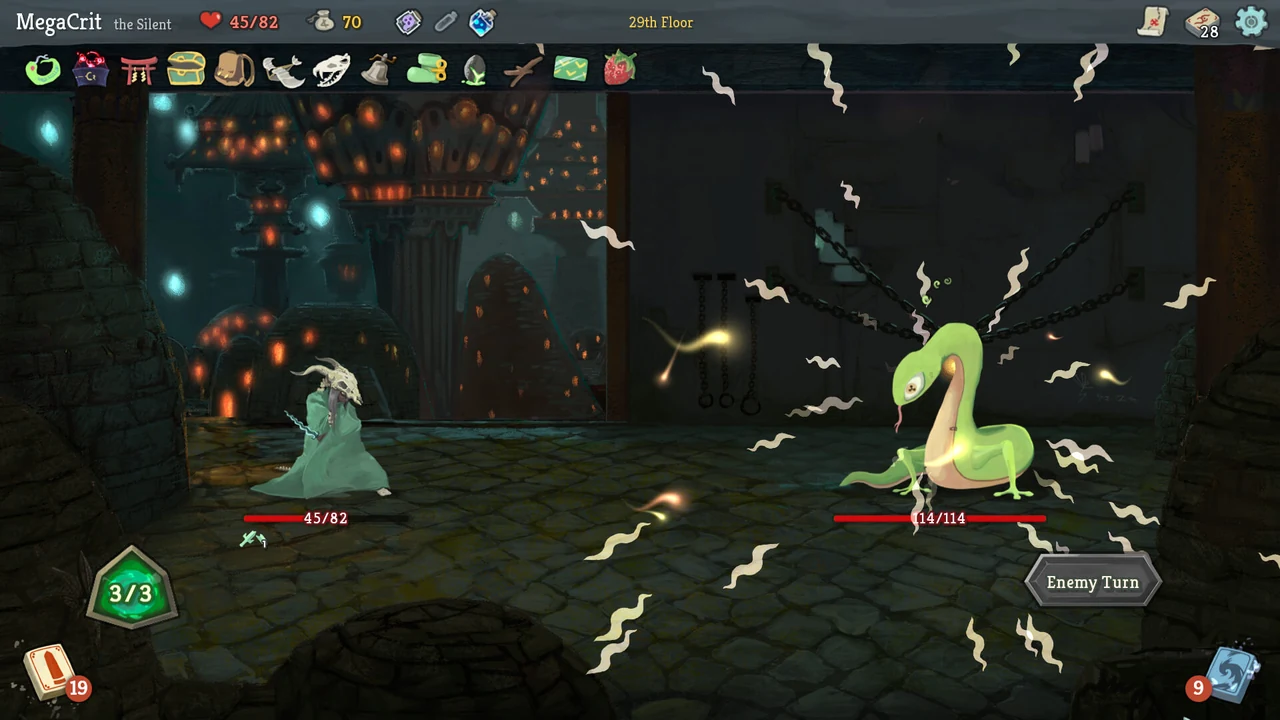
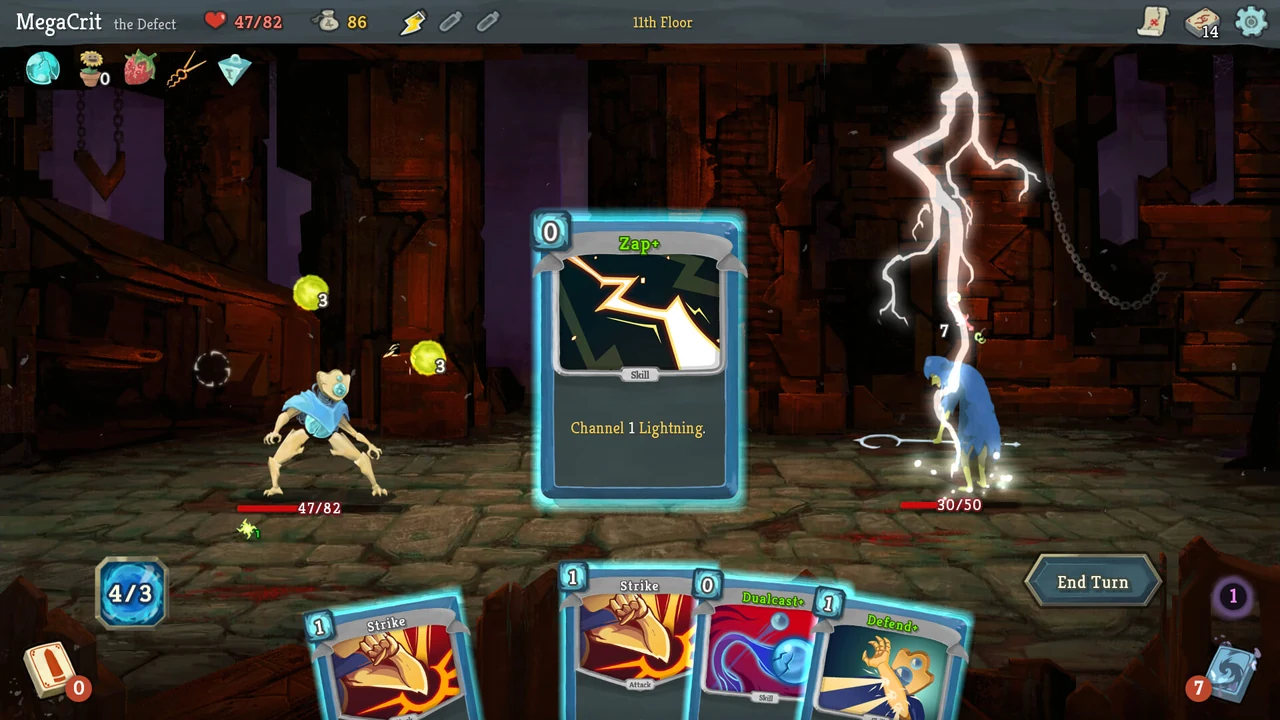
Adding a reward is not automatically an improvement. Every extra card affects how quickly you draw the tools already in the deck, so a tempting effect can weaken consistency if it has no clear role. Relics complicate that calculation in interesting ways, sometimes making an unusual card or pattern much more valuable. Each character brings a different vocabulary, from the Ironclad's resources to the Silent's poison and the Defect's orbs. The game works because those identities remain readable while allowing many combinations. A strong deck is not simply a collection of powerful cards. It needs to survive the next encounter, respond to different enemy patterns and reach its important effects often enough for the underlying plan to matter.
Good decisions do not eliminate uncertainty
Card draw and reward offers prevent a run from becoming a completely controlled exercise. You can make a sensible choice and still face an awkward hand at a bad moment. Conversely, an exciting combination can hide a structural weakness until an enemy attacks in a way it cannot answer. Learning the game means distinguishing those situations, which takes patience across repeated attempts. The presentation is functional rather than lavish, and much of the satisfaction comes from understanding effects rather than watching a spectacular event. Players who prefer a campaign that preserves every success may find the return to the beginning discouraging. The run structure is most rewarding when a loss leaves you with a specific question about how the deck was assembled.
Choose a strategy game that makes revision useful
Slay the Spire fits this guide because it treats revision as the heart of strategy. Removing a card, taking a different route or accepting a modest reward can be more important than pursuing a dramatic combination. The interface keeps the immediate battle understandable, while the map gives each encounter a place in a larger plan. It is an especially strong choice for players who enjoy reviewing their own decisions and testing an improved version on the next run. Someone seeking social competition or a long scripted story should choose another direction. Here, the central drama is whether the system you are constructing can handle a future problem before you know precisely which cards and resources will be available to solve it.
The verdict
A remarkably coherent deckbuilder in which route, reward and removal decisions all contribute to the same evolving plan.
Reasons to play
- Map choices give battles strategic context
- Card removal makes restraint valuable
- Characters offer distinct planning languages
Reasons to think twice
- Awkward draws remain part of the risk
- Restarting can frustrate progression-focused players
See the game
Assist & accessibility
Parents’ guide
Players: Single-player. No in-game purchase marker in the checked Steam listing. Separate downloadable content may be sold.
Age classification: 7. Nintendo Switch edition; not a separate PC classification
A useful starting tip
Evaluate a card by the problem your current deck needs to solve, rather than adding every option that looks powerful alone.
A different direction
Compare this with Wildfrost: A sharp tactical deckbuilder where timing and position matter as much as the cards you collect. Attack countdowns and unit placement make timing decisions as important as the cards selected between battles.
Official sources
Reviewed: November 2026
You might also like
 BalatroRead review →
 Into the BreachRead review →
 FrostpunkRead review →