
THE EXPEDITION REPORT / PLAY REALM GUIDE
Against the Storm
A demanding builder that makes adapting an imperfect settlement more interesting than repeating a perfect blueprint.
Game facts
- Developer
- Eremite Games
- Publisher
- Hooded Horse
- Released
- 8 December 2023
- Platforms
- Windows (Steam edition)
- Model
- Paid game
- PEGI
- 12 · Bad Language, In-Game Purchases — Steam UK listing
- Players
- Single-player
- Length
- Long
- Difficulty
- 4 / 5 · Challenging
- Steam Deck
- Playable
PEGI source ↗ · Steam Deck status source ↗
Edition: Base game
The score, explained
The interest and responsiveness of the core decisions and actions.
How progression, exploration and goals fit together.
The coherence of the visual, musical and narrative presentation.
How clearly the game explains its rules and offers useful ways to engage.
The depth of optional goals, alternative approaches and reasons to return.
Build for the settlement in front of you
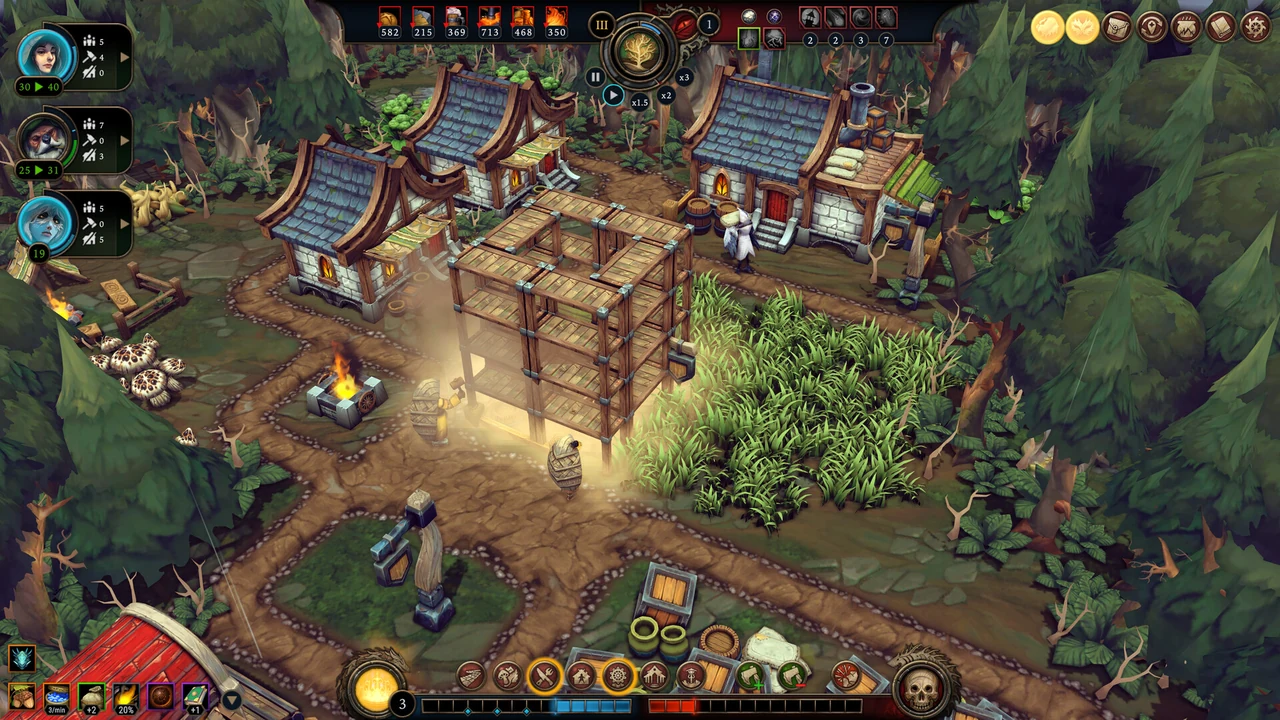
Against the Storm gives city building an immediate strategic question: what does this particular settlement need to succeed? The forest hides resources and events behind glades, while the available blueprints and population create different opportunities from one expedition to the next. A familiar production chain may be less useful than an unfamiliar building that fits the resources already nearby. This keeps the opening active. Roads, storage, fuel and food establish the basic arrangement, but the best plan remains provisional until you understand the surrounding conditions. For this guide, the appeal is a builder that rewards adaptation rather than faithful repetition of a memorised layout. The settlement is a response to its circumstances, not merely a smaller version of an ideal permanent city.
Production is connected to people's needs
Different species contribute distinct needs and strengths, making population more than a single number to increase. A production chain matters because it can support resolve, complete an order or create something valuable to trade. Meanwhile, hostility and the storm place pressure on the same settlement you are trying to expand. Opening another glade can provide resources and opportunities while also adding risk. Those relationships make decisions feel connected across the settlement. A new workshop is not simply an attractive upgrade; it commits workers, materials and fuel that could support another priority. The game is especially effective when a modest adjustment solves several problems together, turning a strained economy into a more coherent system without requiring an enormous expansion of the town's footprint.
There is a lot to understand at once
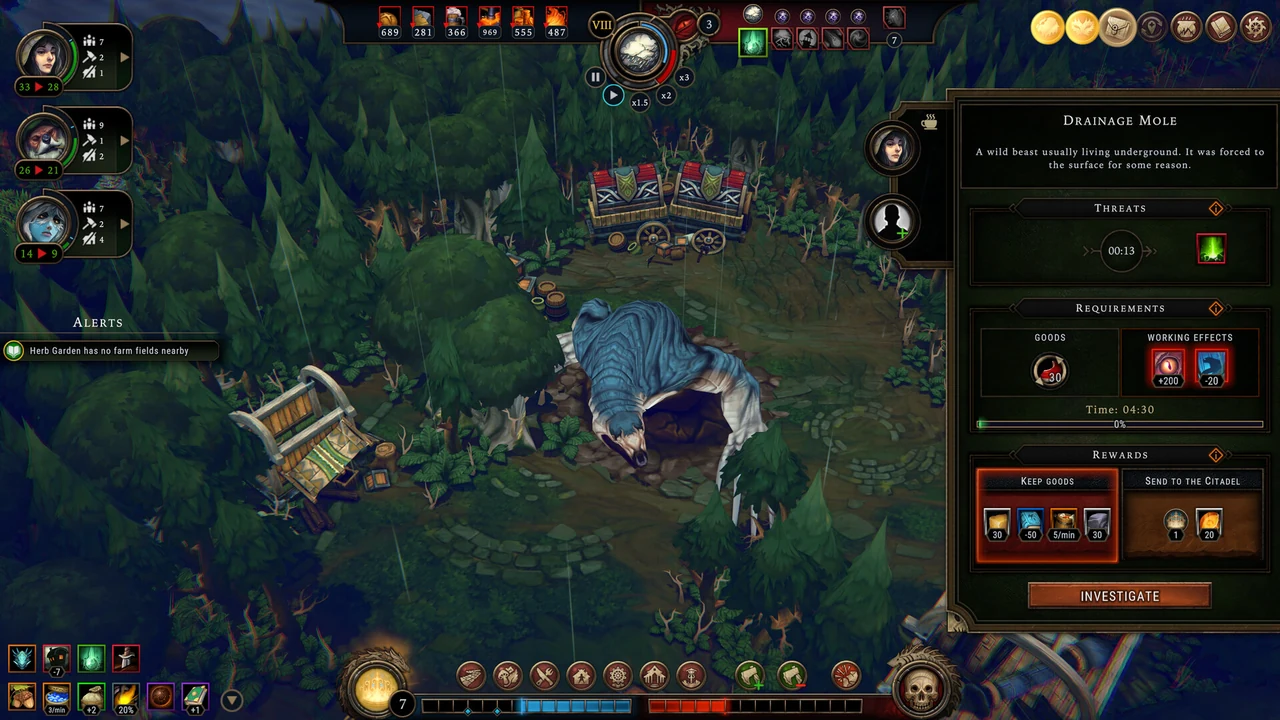
The number of resources, recipes and conditional effects can make the early learning process demanding. A building may offer several production choices, but recognising which one helps the present settlement requires an understanding that develops through repeated attempts. Events in the forest can also create urgent demands before a comfortable supply chain is established. Players who want a peaceful, permanent city should be aware that finishing settlements and beginning again is central to the structure. The broader progression gives those expeditions continuity, but it does not preserve every town as an endlessly expanding home. The design is strongest when a fresh set of constraints feels interesting. It is less appealing if restarting removes the attachment you most enjoy developing in a building game.
Choose it when adaptation beats a perfect blueprint
Against the Storm is a strong recommendation for players who like to ask why a production system works. Its settlements are compact enough for decisions to remain visible, while changing resources and blueprints prevent one solution from answering every expedition. The important satisfaction comes from fitting imperfect tools to a particular situation. That makes it a useful counterpart to the more predictable transport and card systems elsewhere in this selection. Choose it if you enjoy balancing several needs and can accept that a good plan may need revision when the forest reveals something unexpected. Readers seeking a decorative sandbox should choose a gentler builder. Here, the town earns its character through the compromises that allow its people and economy to survive the next period of pressure.
The verdict
A demanding builder that makes adapting an imperfect settlement more interesting than repeating a perfect blueprint.
Reasons to play
- Blueprint variation changes production priorities
- Population needs connect economy to resolve
- Forest exploration offers meaningful risk
Reasons to think twice
- Many recipes and conditions need attention
- Successful towns give way to new settlements
See the game
Assist & accessibility
Parents’ guide
Players: Single-player. Includes optional in-game purchases.
Age classification: 12. Bad Language · In-Game Purchases Steam UK listing
A useful starting tip
Plan around the populations and production options you actually receive rather than forcing the same settlement blueprint every time.
A different direction
Compare this with Frostpunk: A severe city survival game in which a healthy resource ledger does not settle every moral question. Survival planning includes the social cost of decisions, adding pressure that an efficient resource ledger cannot entirely resolve.
Official sources
Reviewed: November 2026
You might also like
 BalatroRead review →
 Into the BreachRead review →
 Slay the SpireRead review →