
THE EXPEDITION REPORT / PLAY REALM GUIDE
FTL: Faster Than Light
FTL is for players who want consequential ship-management decisions and accept that a failed expedition means starting again. Pausing combat lets you prioritise repairs and crew movement while the wider expedition keeps resources under pressure.
Game facts
- Developer
- Subset Games
- Publisher
- Subset Games
- Released
- 14 September 2012
- Platforms
- Windows · macOS · Linux (Steam edition)
- Model
- Paid game
- PEGI
- 12 · Bad Language — Steam UK listing
- Players
- Single-player
- Length
- Medium
- Difficulty
- 4 / 5 · Demanding
- Steam Deck
- Playable
PEGI source ↗ · Steam Deck status source ↗
Edition: Base game
The score, explained
The interest and responsiveness of the core decisions and actions.
How progression, exploration and goals fit together.
The coherence of the visual, musical and narrative presentation.
How clearly the game explains its rules and offers useful ways to engage.
The depth of optional goals, alternative approaches and reasons to return.
Captain a collection of competing needs
FTL places the player in charge of a spaceship whose crew, weapons, shields and power systems can all need attention at once. The game gives combat pausing a central role, allowing decisions to be considered before orders resume. The strongest element is the connection between these systems. Repairing one room may leave another unmanned, while powering an extra weapon means reconsidering what else can remain active. The challenge is therefore prioritisation rather than simply fast input. It is a strong fit for readers who enjoy several manageable problems combining into one difficult situation. Someone seeking a light narrative trip through space may find the constant responsibility for the ship more demanding than expected.
An expedition that accumulates consequences
The route through a changing galaxy brings encounters, equipment choices and opportunities to develop the ship. Setbacks can carry forward, so an immediate solution may make a later problem harder. The official feature list includes the Advanced Edition content and different ships to unlock, providing further ways to approach an expedition. We rate the structure highly because decisions retain weight without requiring an enormous campaign. Permanent defeat remains an important trade-off. Readers who become frustrated when a promising run ends should take that seriously rather than assume a strong build removes the risk. FTL is built around trying to keep an imperfect ship and plan functioning under conditions that are not entirely under the player's control.
A ship you can read as a system
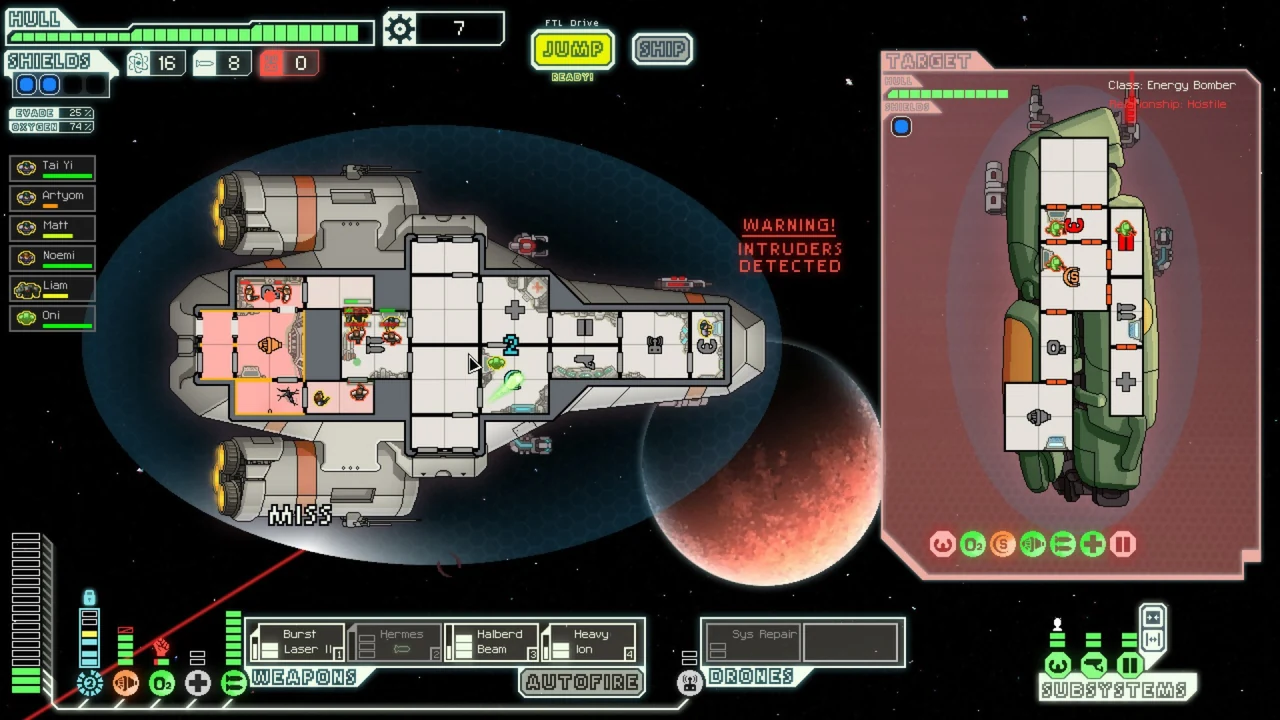
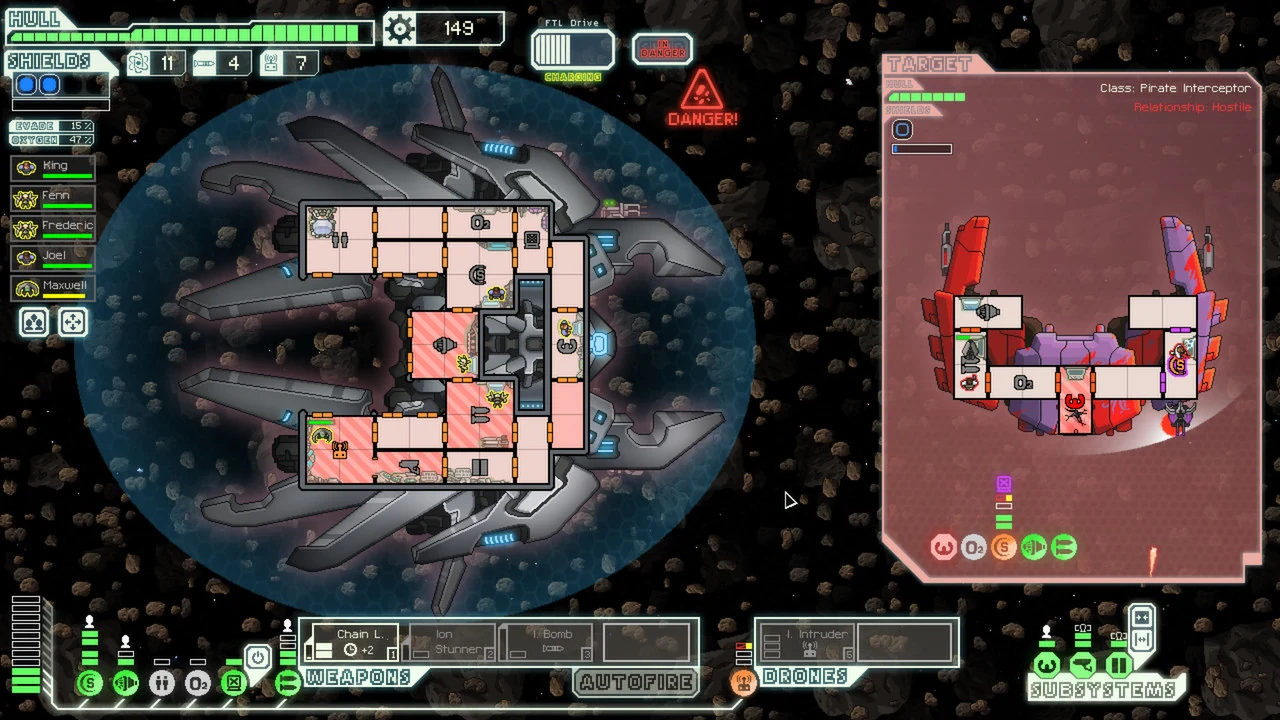
The cutaway presentation makes rooms and crew members part of the tactical information rather than scenery outside the action. Damage has a place, power has competing uses and moving a crew member is a visible commitment. We value this clarity of concept because it makes a small ship feel like a connected working object. The abstract style may be less appealing to someone seeking cinematic space battles, but it supports the central management problem. This is an assessment of the available design and official imagery. Redirecting power between shields, weapons and engines turns damage into a changing tactical problem. A boarding party or a spreading fire can suddenly demand attention elsewhere, making the ship's internal layout as important as the enemy vessel on screen.
Choose it for uncertain expeditions
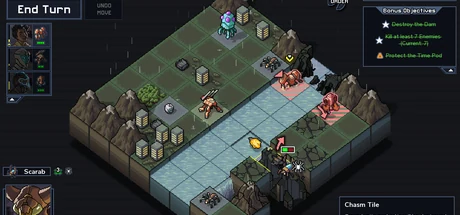
FTL offers clear reasons to return through different ships, equipment and encounters. A run can produce a useful lesson about priorities without guaranteeing that the next galaxy will provide the same opportunities. Our high replay assessment rewards that interaction between a recognisable system and changing conditions. It is less suitable when predictability and preserving every gain are the main preferences. Into the Breach provides a helpful contrast from the same developer, concentrating tactical problems into turn-based boards with visible enemy intentions. Choose FTL when managing an entire ship under uncertain circumstances is the attraction. Its most distinctive decisions concern what can be saved, what must wait and which risk the current expedition can still afford. Pausing combat lets you prioritise repairs and crew movement while the wider expedition keeps resources under pressure.
The verdict
FTL is for players who want consequential ship-management decisions and accept that a failed expedition means starting again. Pausing combat lets you prioritise repairs and crew movement while the wider expedition keeps resources under pressure.
Reasons to play
- Pause-and-command controls emphasise decisions over reflexes
- Crew, weapons and power systems create connected trade-offs
- Different ships and random events support varied expeditions
Reasons to think twice
- Permanent defeat can erase a promising expedition
- Random events can frustrate a carefully chosen plan
- Dense system management is not a light narrative experience
See the game
Assist & accessibility
Explore the available settings and control options on the official game page before choosing your setup.
Parents’ guide
Players: Single-player. No in-game purchase marker in the checked Steam listing. Separate downloadable content may be sold.
Age classification: 12. Bad Language Steam UK listing
A useful starting tip
Pause when several systems fail at once, then decide which problem threatens the whole ship before assigning every crew member a separate repair.
A different direction
Compare this with Into the Breach: Exceptional tactical clarity turns three mechs and a small board into a rich sequence of consequential decisions.
Official sources
Reviewed: November 2026
You might also like
 BalatroRead review →
 Into the BreachRead review →
 Slay the SpireRead review →