
THE EXPEDITION REPORT / PLAY REALM GUIDE
Inscryption
A compelling meeting of card tactics and curiosity, strongest when you welcome the game questioning its own apparent rules.
Game facts
- Developer
- Daniel Mullins Games
- Publisher
- Devolver Digital
- Released
- 19 October 2021
- Platforms
- Windows · macOS · Linux (Steam edition)
- Model
- Paid game
- PEGI
- 16 — Nintendo Switch edition; not a separate PC classification
- Players
- Single-player
- Length
- Medium
- Difficulty
- 2 / 5 · Moderate
- Steam Deck
- Playable
PEGI source ↗ · Steam Deck status source ↗
Edition: Base game
The score, explained
The interest and responsiveness of the core decisions and actions.
How progression, exploration and goals fit together.
The coherence of the visual, musical and narrative presentation.
How clearly the game explains its rules and offers useful ways to engage.
The depth of optional goals, alternative approaches and reasons to return.
The table gives every sacrifice a cost
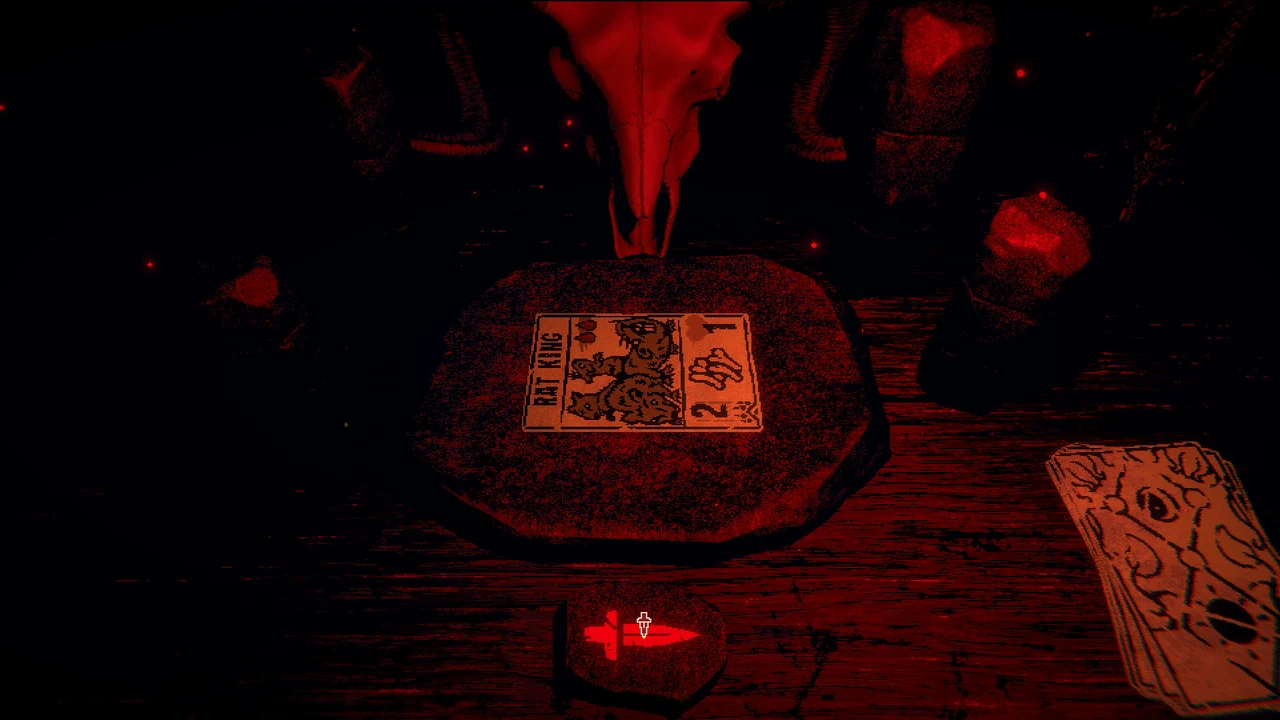
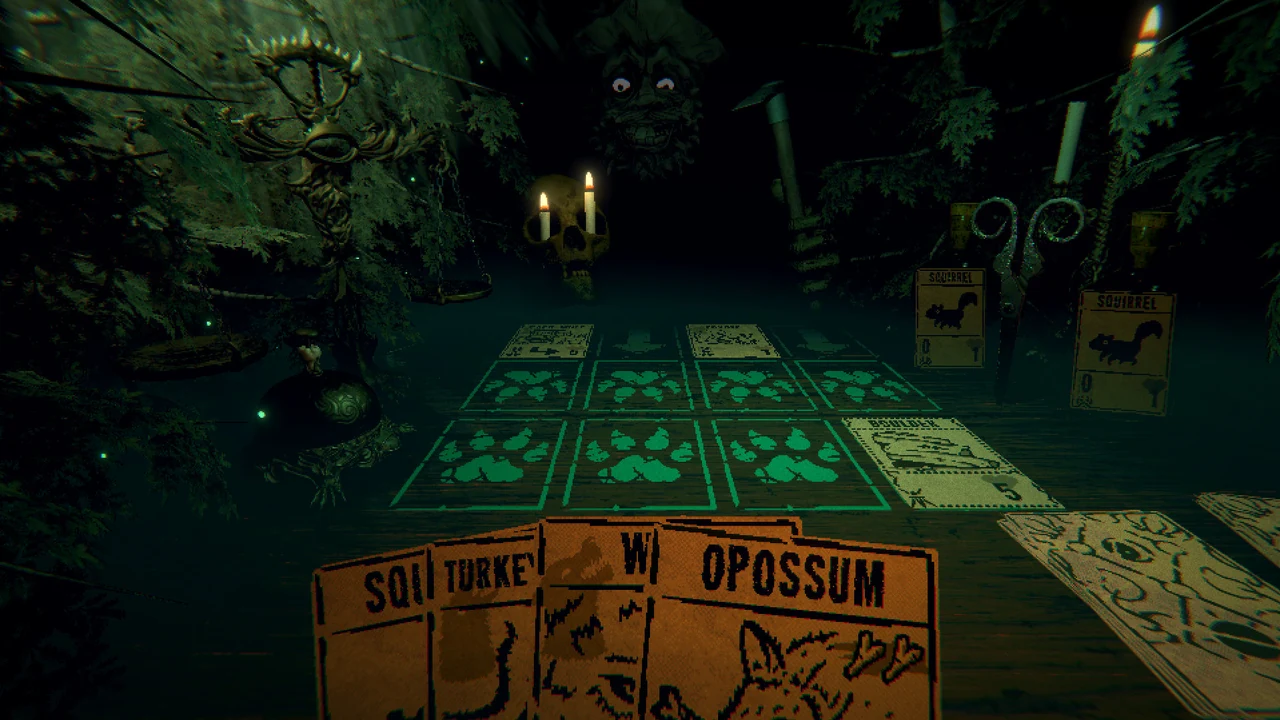
Inscryption opens with a card game whose creatures demand uncomfortable decisions. Blood costs require sacrifices, while bones create another resource from the creatures that have already fallen. Position matters because attacks resolve through lanes, and an apparently expendable card can be the piece that keeps a stronger creature alive long enough to matter. The surrounding cabin makes those rules feel less abstract. The person across the table controls the atmosphere as well as the encounter, and objects beyond the board suggest that the game has more to reveal. For a reader interested in systems, the opening is compelling because it makes a small tactical decision carry both a mechanical consequence and a sense of narrative unease at the same time.
Look beyond the apparent rules
The card battles reward attention to sigils and interactions, but the room also asks to be examined. Moving between the table and the cabin changes the pace, allowing an observation outside combat to influence how the next session is understood. That relationship is the game's distinctive strength: puzzle solving and deck decisions feel connected rather than placed in separate menus. Without spoiling later developments, the structure also resists staying in the form established by the opening. Familiarity is useful, but certainty can be misleading. Players who enjoy discovering how a game is organised will find that curiosity rewarded alongside tactical competence. The result is a strategy experience in which understanding the rules and questioning their boundaries become closely related activities.
The surprises can interrupt a preferred system
Inscryption's willingness to change is also its clearest trade-off. A player who becomes attached to one presentation or set of card interactions may prefer to stay there longer than the main story allows. The atmosphere includes disturbing imagery and a sustained sense of threat, so it is not a neutral replacement for a conventional deckbuilder. Some puzzles also ask you to notice an unusual detail rather than optimise a clearly stated objective. That can be absorbing or frustrating depending on how much guidance you want. The game makes its strongest case when you welcome disruption. If your priority is refining one stable competitive system across many sessions, its narrative ambitions may pull attention away from the activity you most wanted to continue.
Choose it for curiosity as well as calculation
Inscryption belongs in Play Realm Guide as a reminder that an interesting system can also be a way of telling a story. The best reason to begin is curiosity about how the card table, the room and the wider structure fit together. Go in ready to observe and experiment, rather than with the expectation of a conventional collection of increasingly difficult matches. The separate Kaycee's Mod provides a focused way to revisit the cabin's deckbuilding after the main experience, which gives that opening system a useful second life. Choose it when atmosphere and surprise can be part of strategic enjoyment. Readers who want a transparent ruleset without unsettling narrative interruptions will find a better fit among the catalogue's more straightforward tactical games.
The verdict
A compelling meeting of card tactics and curiosity, strongest when you welcome the game questioning its own apparent rules.
Reasons to play
- Sacrifices give card placement immediate stakes
- Cabin puzzles connect to the wider mystery
- Kaycee's Mod revisits the focused card system
Reasons to think twice
- Structural changes may interrupt a favourite format
- Disturbing atmosphere is central
See the game
Assist & accessibility
Explore the available settings and control options on the official game page before choosing your setup.
Parents’ guide
Players: Single-player. No in-game purchase marker in the checked Steam listing. Separate downloadable content may be sold.
Age classification: 16. Nintendo Switch edition; not a separate PC classification
A useful starting tip
When the card table stops giving you useful ideas, inspect the surrounding room and reconsider what counts as part of the game.
A different direction
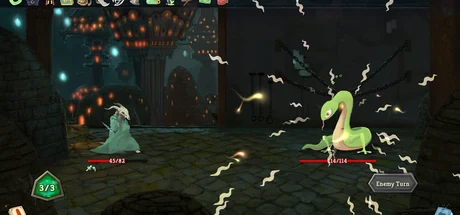
Compare this with Slay the Spire: A remarkably coherent deckbuilder in which route, reward and removal decisions all contribute to the same evolving plan.
Official sources
Reviewed: November 2026
You might also like
 BalatroRead review →
 Into the BreachRead review →
 Slay the SpireRead review →