
THE EXPEDITION REPORT / PLAY REALM GUIDE
Loop Hero
An absorbing indirect strategy game in which constructing the journey is as important as equipping the traveller.
Game facts
- Developer
- Four Quarters
- Publisher
- Devolver Digital
- Released
- 4 March 2021
- Platforms
- Windows · macOS · Linux (Steam edition)
- Model
- Paid game
- PEGI
- 12 — Nintendo Switch edition; not a separate PC classification
- Players
- Single-player
- Length
- Long
- Difficulty
- 2 / 5 · Moderate
- Steam Deck
- Playable
PEGI source ↗ · Steam Deck status source ↗
Edition: Base game
The score, explained
The interest and responsiveness of the core decisions and actions.
How progression, exploration and goals fit together.
The coherence of the visual, musical and narrative presentation.
How clearly the game explains its rules and offers useful ways to engage.
The depth of optional goals, alternative approaches and reasons to return.
Build the expedition around an indirect fighter
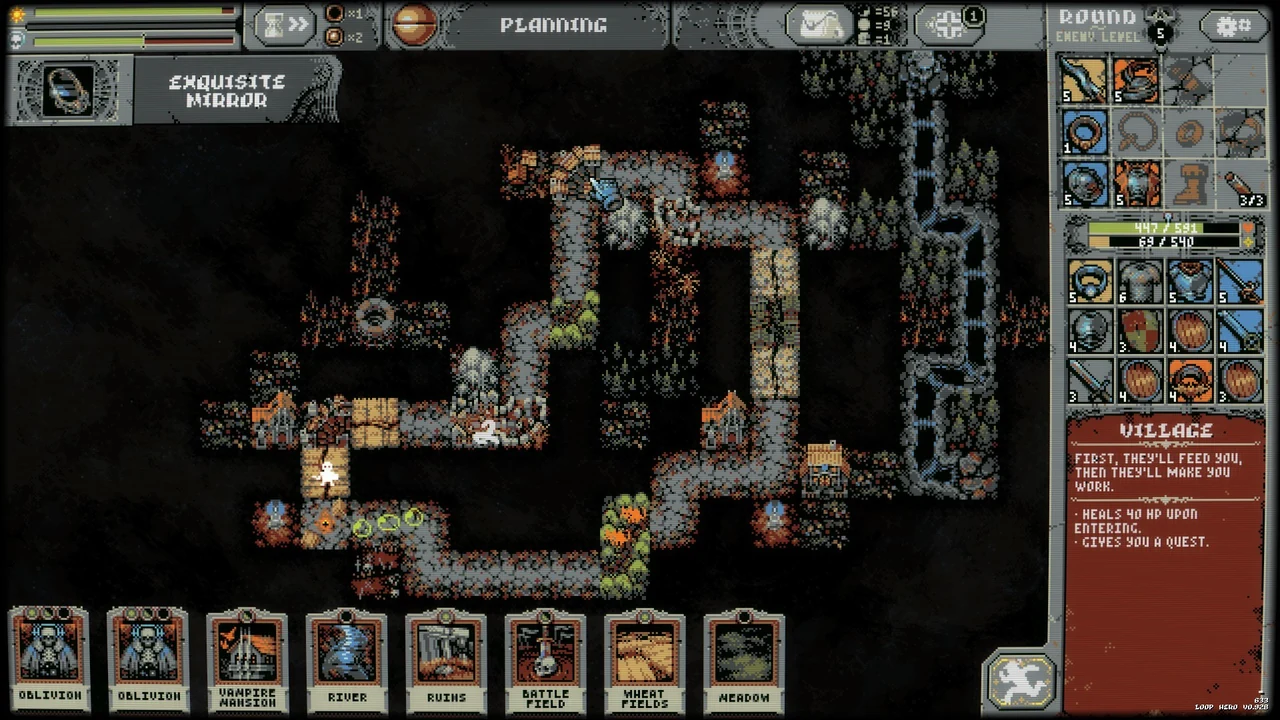
Loop Hero gives you control of the world around a hero who travels and fights automatically. That separation is its central idea. Equipment choices affect survival, while landscape and encounter cards change the route the hero must repeatedly traverse. The opening loops encourage a practical kind of observation: watch which enemies cause trouble, consider what a new tile will add, and decide whether the next circuit is worth the risk. For a strategy reader, the interest is in shaping conditions rather than issuing each attack. You are constructing a challenge and a source of rewards at the same time. A useful tile can support progress, but placing too much pressure on the route can make the expedition collapse before those benefits are collected.
Placement creates relationships between tiles
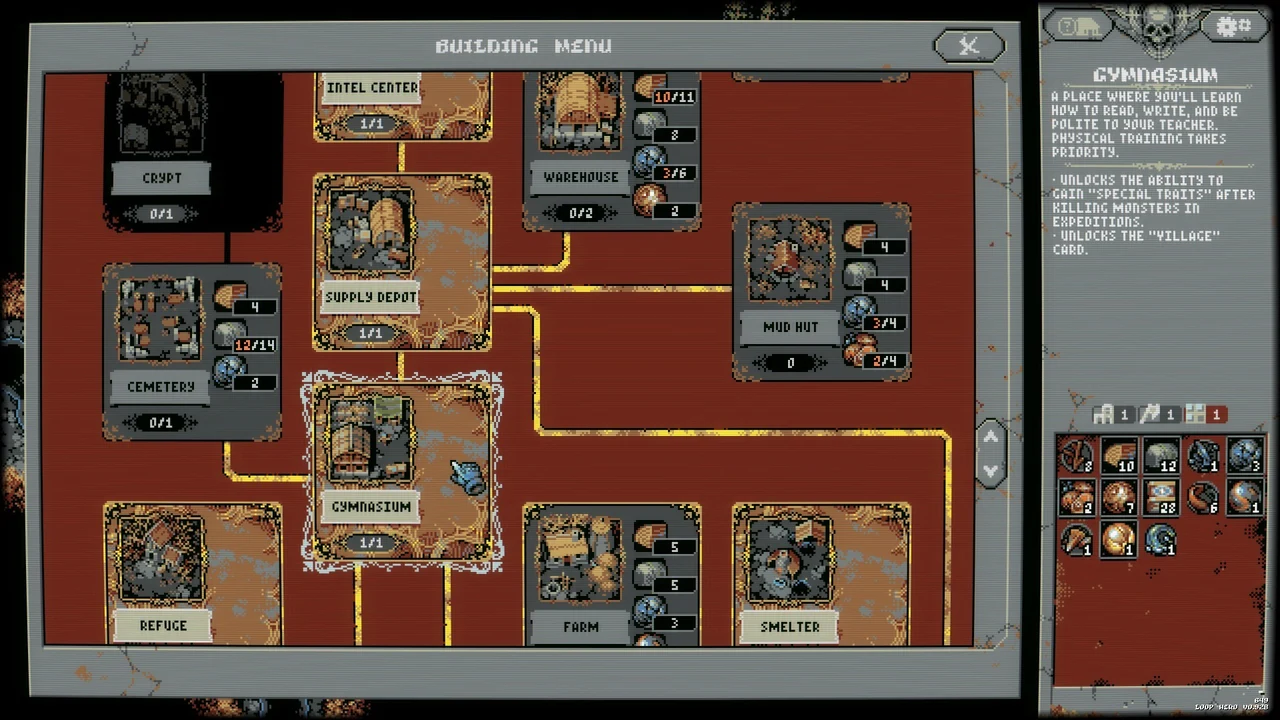
Cards become more interesting when treated as parts of an arrangement rather than isolated bonuses. Some tiles interact with their neighbours, and changing the landscape can alter the enemies and resources encountered along the road. Equipment then needs to support the demands that arrangement creates. A build that handles one pattern comfortably may struggle when the loop introduces a different kind of threat. Returning resources to camp adds another layer, connecting individual expeditions to broader development. The game succeeds when those layers remain in conversation. Camp improvements make new approaches possible, but the current loop still needs sensible placement and equipment decisions. A long-term unlock cannot rescue every badly constructed route, which gives the immediate expedition its own strategic responsibility.
Indirect control can make setbacks feel distant
Watching the hero fight is part of the design, and players who want to intervene in every exchange may find that distance frustrating. Once an encounter begins, earlier choices can matter more than anything you can do in the moment. Repeated loops also make the pace deliberately cyclical, with progress built through preparation, observation and decisions about retreat. The relationship between some tiles is something to discover, so an unfamiliar card can be harder to evaluate than a conventional building with a clearly stated role. These qualities suit an experimental approach but weaken the recommendation for someone seeking immediate tactical control. The important question is whether arranging the conditions of a battle feels as satisfying to you as choosing the individual actions inside it.
Choose it for systems that unfold over time
Loop Hero belongs here because it turns a simple journey around a road into a layered planning problem. The route, equipment and camp all influence one another, while the decision to leave an expedition gives resource gathering a meaningful boundary. It is a strong choice when you enjoy watching a plan operate and adjusting its conditions between repeated tests. The distinctive pixel presentation supports the strange, reconstructed world without demanding constant visual attention to every attack. Readers looking for reflex combat or a tightly paced narrative should choose another direction. The most satisfying progress comes from understanding why a particular arrangement survives, then making a deliberate change that allows the next expedition to achieve something the previous one could not safely attempt.
The verdict
An absorbing indirect strategy game in which constructing the journey is as important as equipping the traveller.
Reasons to play
- Tile relationships reward experimentation
- Retreat gives resource gathering a useful limit
- Camp development connects separate expeditions
Reasons to think twice
- Automatic combat limits immediate intervention
- Repeated circuits require patience
See the game
Assist & accessibility
Explore the available settings and control options on the official game page before choosing your setup.
Parents’ guide
Players: Single-player. No in-game purchase marker in the checked Steam listing. Separate downloadable content may be sold.
Age classification: 12. Nintendo Switch edition; not a separate PC classification
A useful starting tip
Think about the danger a new tile creates across several laps, not only the reward it offers immediately.
A different direction
Compare this with Slay the Spire: A remarkably coherent deckbuilder in which route, reward and removal decisions all contribute to the same evolving plan.
Official sources
Reviewed: November 2026
You might also like
 BalatroRead review →
 Into the BreachRead review →
 Slay the SpireRead review →