
THE EXPEDITION REPORT / PLAY REALM GUIDE
Wildfrost
A sharp tactical deckbuilder where timing and position matter as much as the cards you collect. Attack countdowns and unit placement make timing decisions as important as the cards selected between battles.
Game facts
- Developer
- Deadpan Games, Gaziter
- Publisher
- Chucklefish
- Released
- 12 April 2023
- Platforms
- Windows (Steam edition)
- Model
- Paid game
- PEGI
- 7 — Nintendo Switch edition; not a separate PC classification
- Players
- Single-player
- Length
- Medium
- Difficulty
- 4 / 5 · Challenging
- Steam Deck
- Verified
PEGI source ↗ · Steam Deck status source ↗
Edition: Base game
The score, explained
The interest and responsiveness of the core decisions and actions.
How progression, exploration and goals fit together.
The coherence of the visual, musical and narrative presentation.
How clearly the game explains its rules and offers useful ways to engage.
The depth of optional goals, alternative approaches and reasons to return.
Timing changes the meaning of a turn
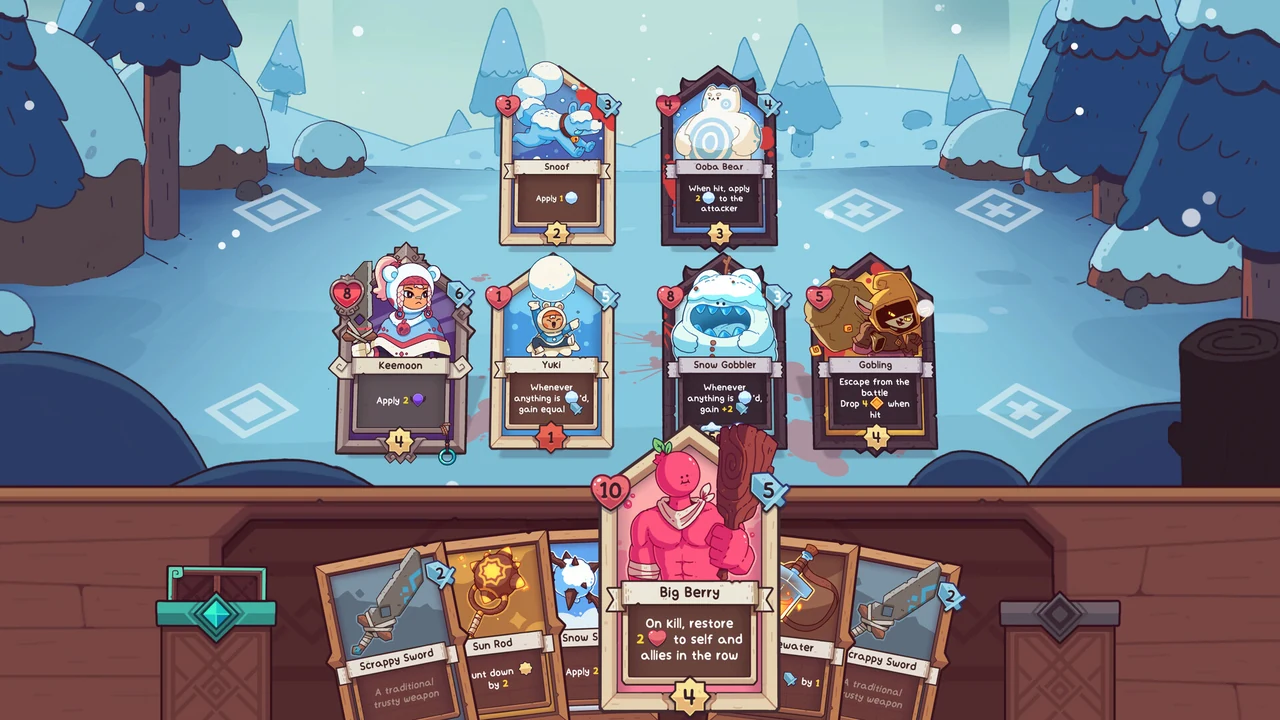
Wildfrost builds its card battles around companions and visible counters. Cards do not all attack after every action; their counters determine when automatic moves occur, making timing a resource you can plan around. A useful turn may delay an enemy, prepare a companion or bring an important attack closer rather than deal the most immediate damage. Our core-play assessment rewards that clear tactical identity. It gives the player several reasons to study the current board before reaching for a familiar combination. The friendly artwork should not obscure the attention required. When multiple counters and effects interact, a small oversight can change the outcome of a plan, so the game is better suited to deliberate play than distracted card selection.
A deck grows around its companions
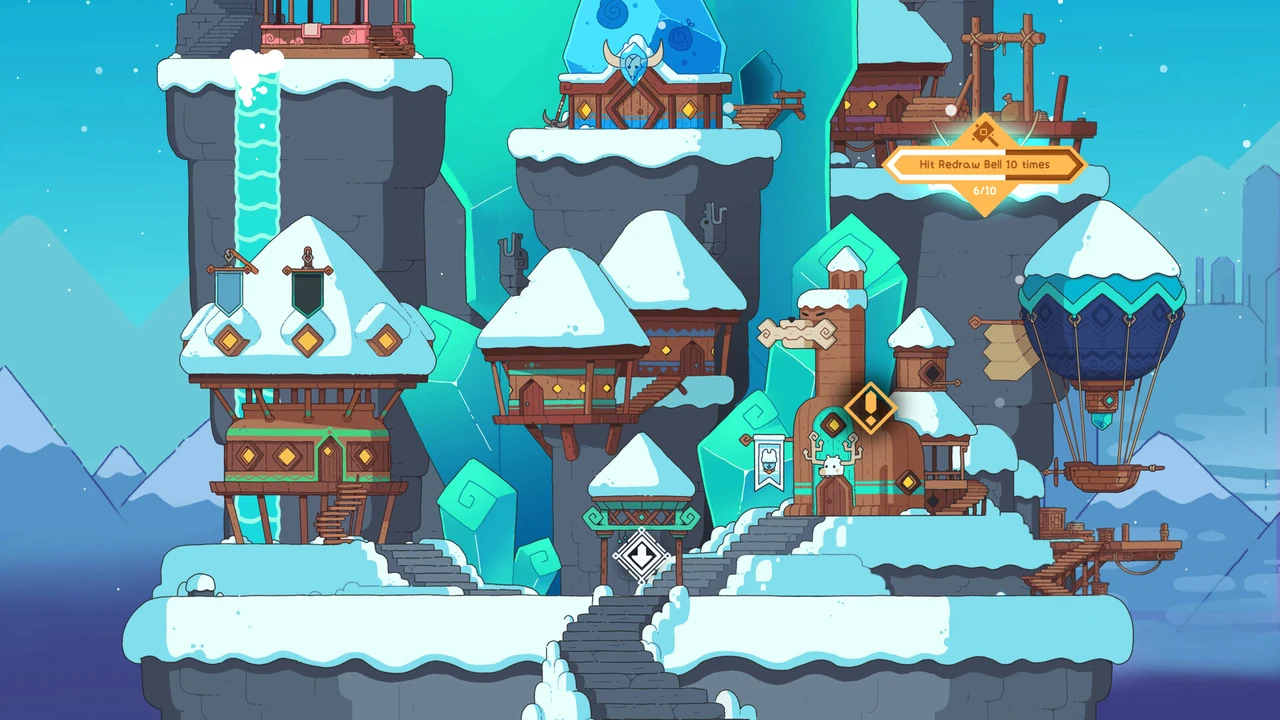
Runs begin with a chosen leader and develop through recruited companions, items and other cards. Charms modify useful characters, while route choices influence the opportunities available during the expedition. Returning to Snowdwell supports longer-term development through buildings and unlocks. We rate the structure positively because it connects immediate tactical choices to a changing deck without making every run identical. The important question is not simply whether a new card is strong, but whether it helps the specific group and timing plan already taking shape. This can create satisfying decisions about direction and restraint. It also means a player who wants to collect every attractive option may need to learn when a smaller, more coherent set of interactions is preferable.
Friendly shapes, serious decisions
Wildfrost's characterful companions and frozen setting give its cards a strong visual identity. They make individual units memorable, which is useful when the tactical system asks you to track their different roles and attack schedules. Our presentation score reflects that relationship between personality and function rather than treating the artwork as evidence of easy difficulty. The design includes powerful enemies, leader choices and challenge modes, so the intended audience should still expect to learn and make mistakes. The learning curve is lower because the interaction between counters, card effects and positions creates a genuine learning demand. Cards occupy positions as well as holding effects, and attack countdowns make the order of events crucial.
A reason to revise the next run
Wildfrost gives repeat play a concrete foundation through changing leaders, deck opportunities, town development and available daily challenges. That supports a high return score because a failed plan can suggest a specific adjustment rather than only another identical attempt. The appeal depends on enjoying that process of revision. If you mainly want a story to move forward after each battle, the repeated expedition structure may be less satisfying. Slay the Spire offers a useful comparison for a card-focused game with a different rhythm of direct decisions and enemy intentions. Choose Wildfrost when companions, positioning and the order of automatic attacks are the details you want to examine. Its strongest moments, by design, should come from understanding what will happen next before committing the turn. Attack countdowns and unit placement make timing decisions as important as the cards selected between battles.
The verdict
A sharp tactical deckbuilder where timing and position matter as much as the cards you collect. Attack countdowns and unit placement make timing decisions as important as the cards selected between battles.
Reasons to play
- Visible counters make timing a central tactical resource
- Companions and charms provide clear build decisions
- Town unlocks and challenge options support repeated play
Reasons to think twice
- Several counters and interactions demand attention
- Cute artwork does not imply forgiving tactical decisions
See the game
Assist & accessibility
Explore the available settings and control options on the official game page before choosing your setup.
Parents’ guide
Players: Single-player. No in-game purchase marker in the checked Steam listing. Separate downloadable content may be sold.
Age classification: 7. Nintendo Switch edition; not a separate PC classification
A useful starting tip
Check every relevant attack counter before spending a turn; the next automatic action may matter more than immediate damage.
A different direction
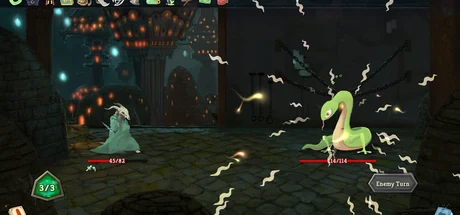
Compare this with Slay the Spire: A remarkably coherent deckbuilder in which route, reward and removal decisions all contribute to the same evolving plan.
Official sources
Reviewed: November 2026
You might also like
 BalatroRead review →
 Into the BreachRead review →
 Slay the SpireRead review →